Fluke 117 Review: An Electrician’s Meter in an HVAC Bag
Reader-supported: we may earn a commission if you buy through our links, at no extra cost to you. As an Amazon Associate we earn from qualifying purchases.
Top pickFluke 117Check price
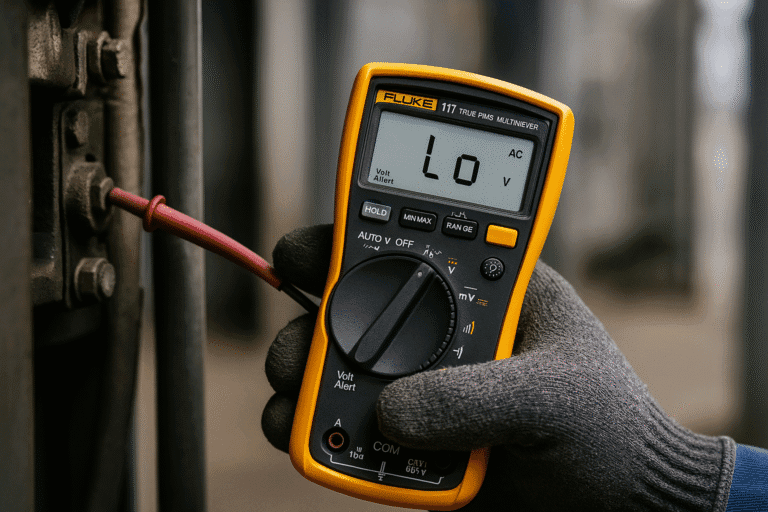
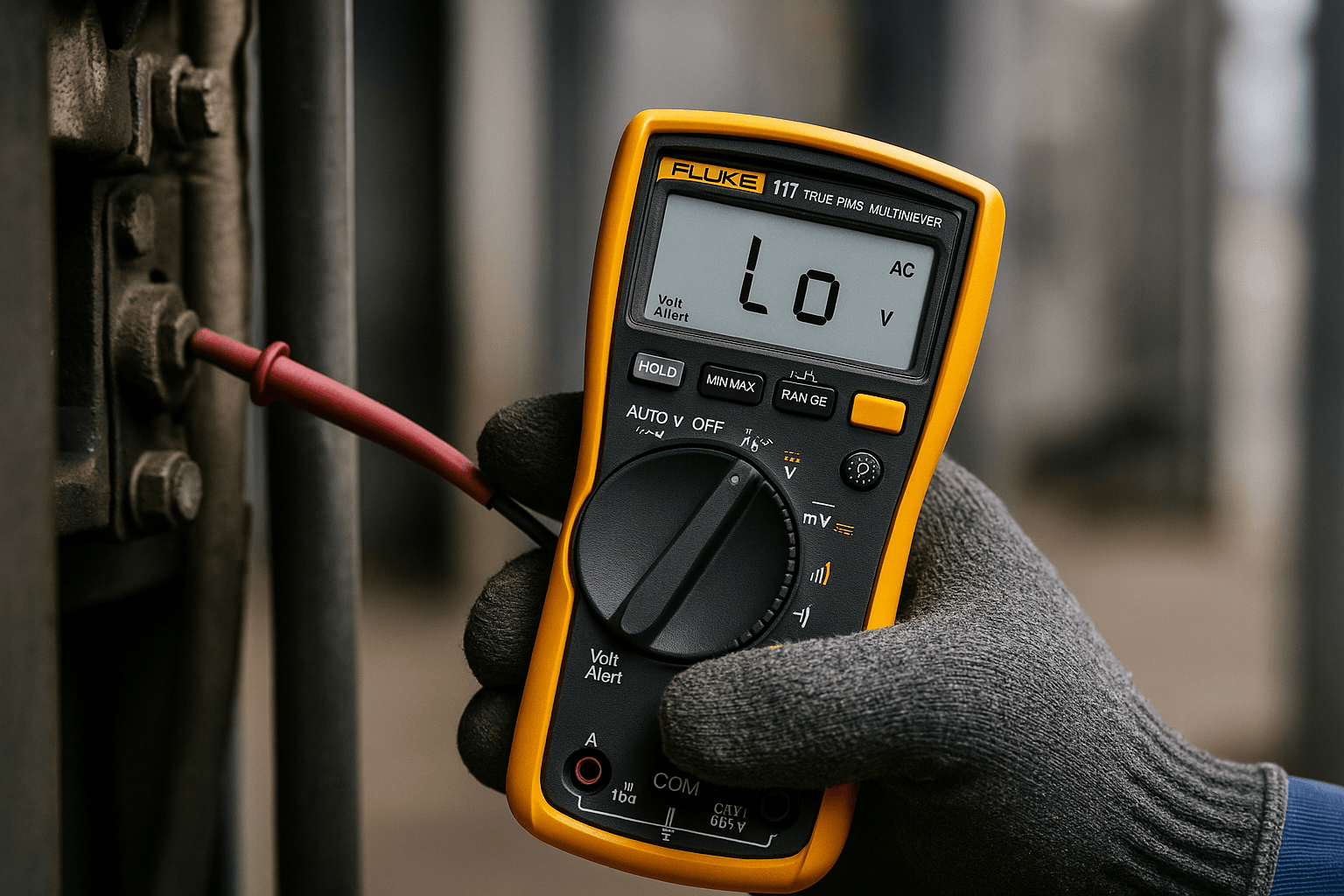
The Fluke 117 is one of the most common meters on electrical job sites, and for good reason: True-RMS, a 10 A current input, LoZ for ghost voltage and VoltAlert non-contact detection in a compact body. HVAC techs often buy it on reputation. Before you do, know the one thing it cannot do.
Specs at a glance
Best for: Techs who also do general electrical work and want a 10 A input and NCV in a Fluke; not a flame-sensor meter.
- True-RMS AC volts to 600 V; DC volts 600 V at +/-(0.5% + 2)
- AC/DC current to 10 A (1 mA max resolution); no microamp range
- Capacitance 1 nF to 9999 uF; resistance to 40 Mohm; frequency to 50 kHz
- Integrated VoltAlert non-contact voltage detection
- Auto-V/LoZ mode for ghost voltage
Why it stands out
- 10 A AC/DC current input that the 116 lacks
- Built-in non-contact voltage detection
- LoZ mode and True-RMS
- Same compact 550 g body and 400 h battery life as the 116
Keep in mind
- No microamp range, so it cannot test flame sensors
- Priced well above the budget tier, so it is a step-up pick rather than a starter meter
What the Fluke 117 does well
- 10 A current input for direct current measurement, which the Fluke 116 lacks.
- VoltAlert non-contact voltage built into the meter, handy for a quick check before you probe.
- Auto-V/LoZ mode to collapse ghost voltage.
- Capacitance to 9,999 uF, the same as the 116.
- CAT III 600 V and about 400 hours from a 9 V battery, according to Fluke.
Why HVAC techs should think twice
The 117’s current ranges start at amps, with 1 mA as the finest resolution. A flame sensor signal is a few microamps, so the 117 cannot read it. Temperature is also not a listed function on independent spec sheets, so do not plan on using it for superheat or delta-T. For furnace work, that sends you to the Fluke 116 or an HVAC clamp meter.
Who should buy it
Techs whose work leans electrical: wiring, controls, lighting, building maintenance. It also suits HVAC installers who already carry a clamp meter with microamps and want a general meter with NCV.
What to pair with the 117
The 117 is a good general meter, and its gaps are easy to fill. A clamp with a microamp range handles flame-sensor checks, and a separate thermometer handles line and air temperature. Together that kit costs more than a single Fluke 116, so compare the total before choosing. If you are building a kit around HVAC service, read the multimeter guide and the clamp meter guide first. If most of your work is electrical and building maintenance, the 117 is the meter that belongs in the bag.
Reading the safety ratings
A CAT rating tells you where a meter is built to be used. Check the rating printed on the meter and in Fluke’s manual for the exact categories and voltages before you work on any panel or service entrance. Use rated leads and keep them in good condition, since a damaged lead defeats the rating. These habits matter more on an electrical meter than on one used mostly for low-voltage controls, which is another reason the 117 suits electrical work.
Frequently asked questions
Can the Fluke 117 test a flame sensor?
No. It has no microamp range. Its current ranges are 6 A and 10 A with 1 mA maximum resolution. Use a Fluke 116 or a clamp meter with a microamp range.
Does the Fluke 117 measure temperature?
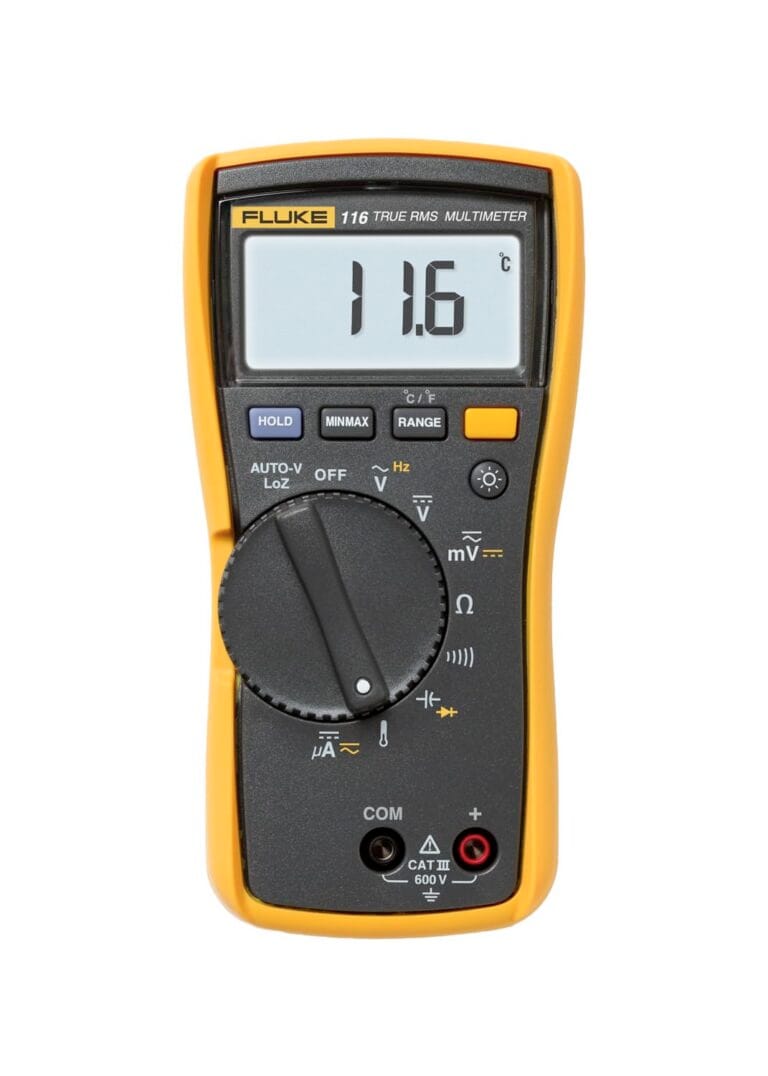
Temperature is not listed among its functions on independent spec sheets, so treat it as a meter without temperature. The Fluke 116 includes a Type K input and probe.
Fluke 117 or 116 for an HVAC apprentice?
Most HVAC service work favors the 116 for flame sensors and temperature. If your role is mostly electrical, the 117's 10 A input and NCV are more useful.
Keep reading
Sources
Specifications and product details were checked against these sources: