Fluke 116 vs 117: Which Meter Should an HVAC Tech Buy?
Reader-supported: we may earn a commission if you buy through our links, at no extra cost to you. As an Amazon Associate we earn from qualifying purchases.
Top pickFluke 116Check price
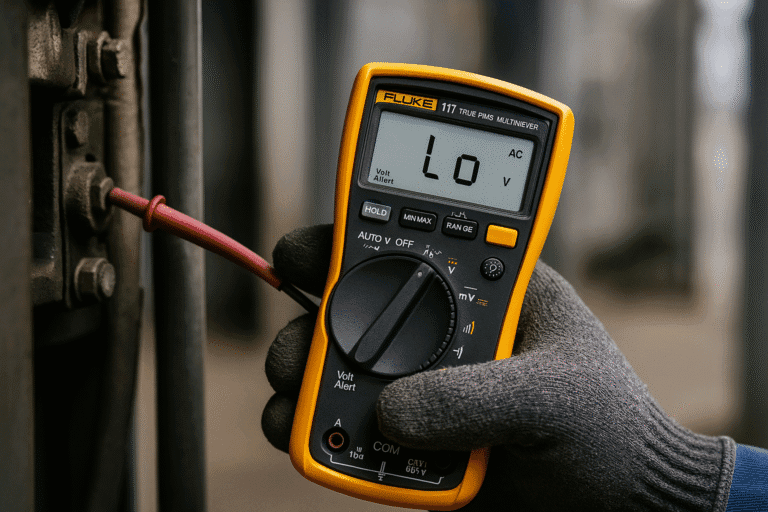
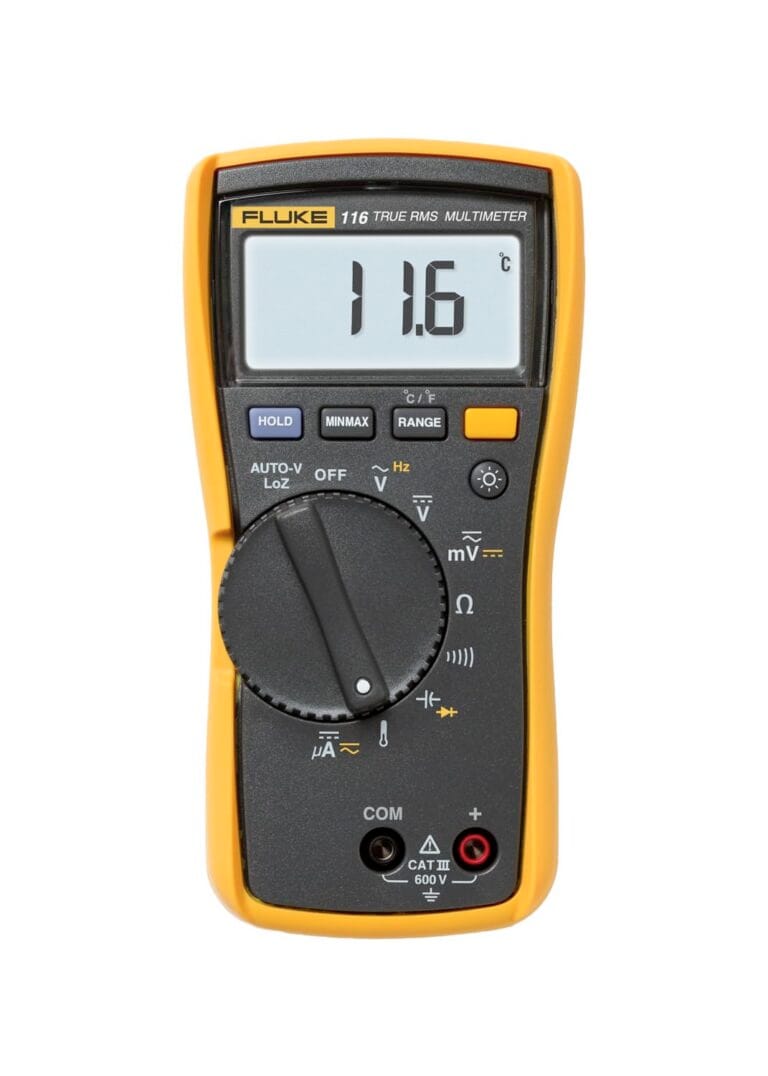
The Fluke 116 and 117 share the same body, display, battery life, capacitance range, LoZ mode and CAT III 600 V rating. The difference is which trade each one is built for. The 116 adds the HVAC functions, microamps and temperature. The 117 adds the electrician functions, a 10 A input and non-contact voltage.
Check Fluke 116 priceCheck Fluke 117 price
The two models compared
Best for: Residential and light-commercial HVAC service techs who need flame sensor, capacitor and temperature checks in one meter.
- True-RMS AC volts to 600 V
- AC and DC microamps: 600.0 uA range, 0.1 uA resolution (flame sensors)
- Type K temperature -40 to 752 F (-40 to 400 C), 80BK probe included
- Capacitance to 9999 uF; resistance to 40 Mohm; frequency to 50 kHz
- Auto-V/LoZ mode
Why it stands out
- Microamps, temperature and capacitance cover the core furnace and condenser tests
- Includes 80BK Type K probe
- LoZ mode for ghost voltage
- 3-year warranty and long battery life
Keep in mind
- No 10 A current input; you still need a clamp meter for amps
- No built-in non-contact voltage
- Expensive next to Klein or UEi meters with similar HVAC functions
Best for: Techs who also do general electrical work and want a 10 A input and NCV in a Fluke; not a flame-sensor meter.
- True-RMS AC volts to 600 V; DC volts 600 V at +/-(0.5% + 2)
- AC/DC current to 10 A (1 mA max resolution); no microamp range
- Capacitance 1 nF to 9999 uF; resistance to 40 Mohm; frequency to 50 kHz
- Integrated VoltAlert non-contact voltage detection
- Auto-V/LoZ mode for ghost voltage
Why it stands out
- 10 A AC/DC current input that the 116 lacks
- Built-in non-contact voltage detection
- LoZ mode and True-RMS
- Same compact 550 g body and 400 h battery life as the 116
Keep in mind
- No microamp range, so it cannot test flame sensors
- Priced well above the budget tier, so it is a step-up pick rather than a starter meter
Fluke 116 vs 117 spec differences
| Spec | Fluke 116 | Fluke 117 |
|---|---|---|
| Current | Microamps only: 600.0 uA AC/DC, 0.1 uA resolution | 6 A and 10 A AC/DC, 1 mA resolution, no microamps |
| Flame sensor testing | Yes | No |
| Temperature | Type K, -40 to 752 F, probe included | Not listed |
| Non-contact voltage | No | Yes (VoltAlert) |
What they share
- True-RMS AC voltage to 600 V and Auto-V/LoZ mode
- Capacitance to 9,999 uF, resistance to 40 Mohm, frequency to 50 kHz
- 6,000-count backlit display, 9 V battery rated about 400 hours
- 550 g, CAT III 600 V, 3-year warranty
Which one should you buy?
Picture your last ten service calls. If furnaces, flame sensors and temperature checks show up, the 116 does those jobs and the 117 cannot. If you measured current through the meter or wanted a quick non-contact voltage check more often, the 117 is the better tool. Either way, an HVAC tech still needs a clamp meter for compressor and motor amps; see our clamp meter guide.
A quick decision rule
If more than half your calls are furnaces, heat pumps and condensers, buy the 116. If you also wire circuits and want a 10 A input, buy the 117 and carry a clamp that reads microamps. When you cannot decide, remember that only one of the two reads the flame-sensor signal.
Frequently asked questions
Is the Fluke 116 better than the 117 for HVAC?
For most HVAC service work, yes, because it reads flame sensor microamps and temperature. The 117 cannot do either.
Why is the Fluke 117 more expensive?
Fluke prices them close together, with the 117 a little higher. Check the current price on Amazon for both before you pick.
Can the Fluke 117 test a flame sensor?
No. Its current ranges start at amps, with 1 mA as the finest resolution, and a flame sensor signal is a few microamps.
Keep reading
Sources
Specifications and product details were checked against these sources: