Hilmor Compact Swage Tool Review
Reader-supported: we may earn a commission if you buy through our links, at no extra cost to you. As an Amazon Associate we earn from qualifying purchases.
Top pickHilmor Compact Swage Tool KitCheck price
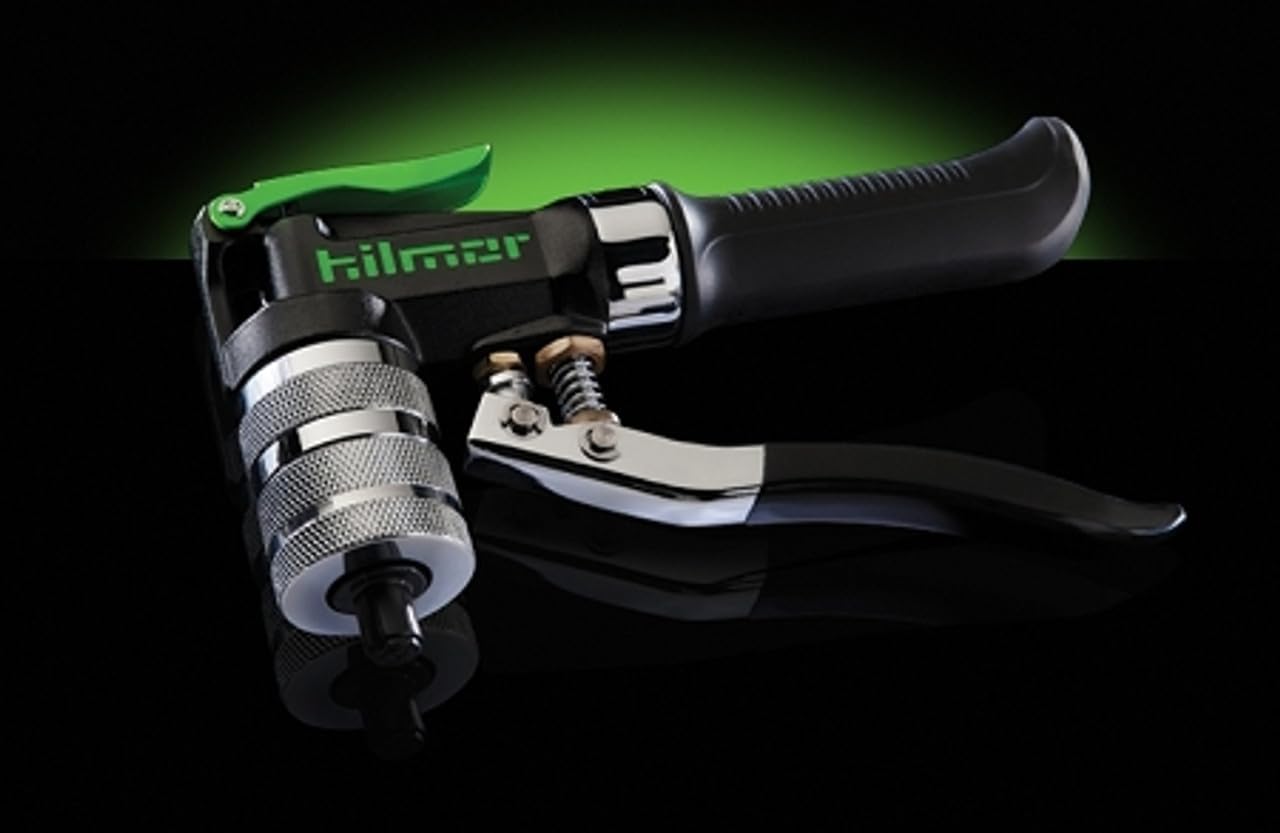
A swage tool expands the end of a copper tube so another tube slides into it, which replaces a coupling. That means one braze joint instead of two, and one fewer fitting in the truck. The Hilmor Compact Swage Tool Kit is a hydraulic version with five heads and a case.
Check Hilmor Compact Swage Tool Kit price
Specs at a glance
Best for: Line set installers who want a compact swage instead of buying fittings.
- Hydraulic lever with release button for one-handed use
- Five expander heads: 3/8, 1/2, 5/8, 3/4 and 7/8 in
- Kit includes a deburring tool and a carrying case
- Works on soft copper, aluminum, brass and steel tubing
- Hilmor's feature list says it can swage 1-5/8 in tubing and 5/16 in without splitting
Why it stands out
- One-handed lever and release
- Case and deburrer included
- Compact
Keep in mind
- Published size ranges vary by seller (3/8 to 1-1/8 in, or up to 1-5/8 in), so confirm the heads you need
What the listing says
- Hydraulic lever with a release button for one-handed use.
- Five expander heads. 3/8, 1/2, 5/8, 3/4 and 7/8 in.
- Kit contents. A deburring tool and a carrying case.
- Materials. Soft copper, aluminum, brass and steel tubing.
- Compact. Designed for tight spaces.
Where the sources disagree
Hilmor’s feature list says the tool can swage 1-5/8 in tubing and 5/16 in without splitting. A distributor title gives the range as 3/8 to 1-1/8 in. The five heads listed on the Amazon page do not reach 1-5/8 in. Check that the heads you need are in the kit.
Why swage instead of coupling
Every coupling is two braze joints. A swage makes one. On a repair with a short line set, the saved joint is one fewer place for a leak. It also takes less copper. Make sure the tubing end is deburred and square, and keep the tube clean before brazing. If you braze, purge with nitrogen from a regulator.
Who should buy it
Installers and service techs who cut and join copper regularly. Occasional users may prefer to carry couplings. For the rest of a service kit, read our HVAC tools guide.
How a swage joint goes together
Cut the tube square and deburr both the inside and the outside, so the swage does not crack and the joint seats fully. Choose the head that matches the tube size, expand the end to the depth the tool allows, and check that the mating tube slides in with an even gap all the way around. Clean both surfaces before brazing, and flow nitrogen through the line while you braze so scale does not form inside. A uniform gap lets the filler flow into the joint, while a loose or uneven fit invites a leak. Always follow the equipment maker’s instructions and your local code for brazed refrigerant joints.
What a swage tool will not do
A swage does not fix a kinked, split or out-of-round tube. It does not replace a proper fit-up, and it does not remove the need for clean surfaces and a good braze. The tool’s reach is limited by its heads, so a larger line set may need a different tool or a coupling. If you work on aluminum or steel tubing, check the maker’s guidance, because those materials behave differently from soft copper. Treat the tool as one way to cut down on couplings, and keep a few couplings in the truck for the jobs it cannot handle.
Frequently asked questions
What sizes does the Hilmor compact swage kit cover?
Five heads: 3/8, 1/2, 5/8, 3/4 and 7/8 in. Sources disagree on the maximum tube size, so check before you buy.
Does it include a deburring tool?
Yes, and a carrying case.
Can it swage steel?
Hilmor lists soft copper, aluminum, brass and steel tubing.
Keep reading
Sources
Specifications and product details were checked against these sources: